AI in vocational training: what was discussed at the 4th ENEF
On 1 October I was at Instituto Piaget in Viseu for the 4th National Meeting of Training Providers (ENEF), organised by APEFOR, the Portuguese association of training providers. The theme of the meeting was “Transform to Empower: Reforming, Funding and Innovating the Future of Training”.
I took part in panel 3, “AI in Training: Between Potential and Responsibility”, with Prof. Celestino Magalhães (Educational Technologies, Instituto Piaget), who gave the keynote, and consultant Cláudio Costa. The panel was moderated by António Miranda, from the meeting’s organising committee.
Here is a summary of what I presented and what stayed with me most from the other talks.
The context of the day
The AI panel was the third of four. In the morning, DGERT, IEFP and EduQA spoke about the reform under way: a new National Qualifications Catalogue, with UFCD training units giving way to credit-based units of competence, and a new legal framework for vocational training in preparation. In the funding panel, PESSOAS 2030 pointed the way towards results-based funding, and COMPETE 2030 plans to open an 80 million euro call for AI training in companies by the end of the year. In the afternoon, panel 4 discussed active learning methods and closed with humanisation as a core competence.
People are moving, companies are not
Eurostat data for 2025 shows a curious gap in Portugal. 38.7% of Portuguese people aged 16 to 74 have already used generative AI (the EU average is 32.7%) and 19.9% use it at work. But only 11.5% of companies with 10 or more employees use AI, against 20% in the EU. Portugal ranks 22nd out of 28 countries.
People are already using AI on their own. Organisations are still deciding what to do about it. (I wrote more about this gap.)
September 2026: AI stopped waiting for the question
In 3 weeks, 3 of the biggest labs showed the same thing:
- 8 September: Meta launched Muse, a personal agent that buys, books and pays on the user’s behalf (US only).
- 15 to 17 September: at xAI’s Grok Bot Galaxy, 3 people tried to build a company from scratch with bots as co-workers, live.
- 29 September: OpenAI presented Dots, always-on agents with their own computer and connections to more than 4,000 apps.
With a chatbot, I ask, it answers, and I decide and act. With a copilot, the AI helps me with a task and I control every step. An autonomous agent receives a goal, plans, acts, observes the result and adapts, and only calls me when a decision is needed. It is the difference between having a tool and having a digital co-worker.
The names will change quickly. The pattern stays: access to applications, memory across sessions and autonomy over several steps.
Where the agent comes in at a training provider
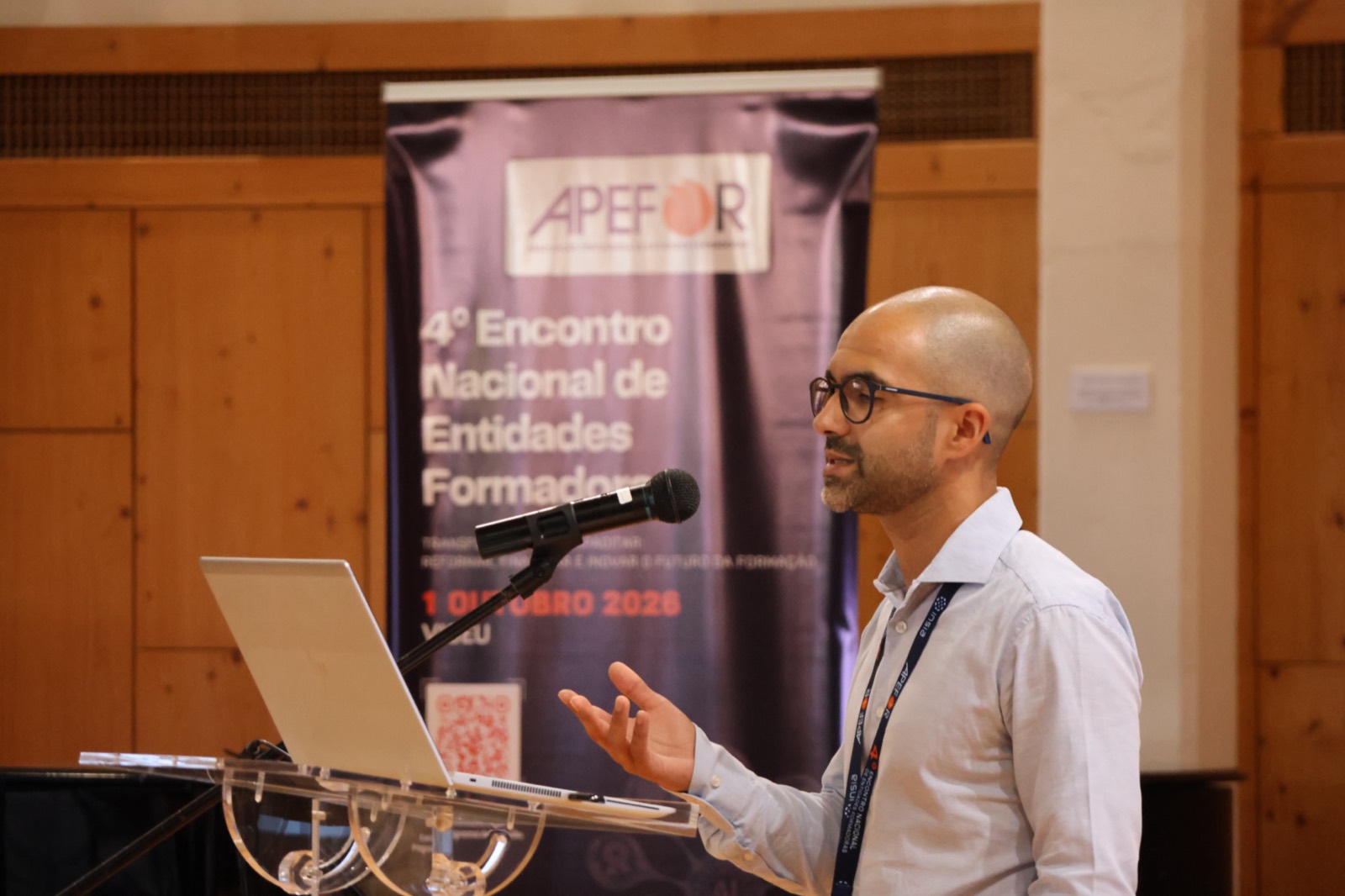
I started with a question for the room: who spent more than an hour this week copying information from one place to another?
Agents come in first around the training itself:
- Administration: qualifying information requests and replying out of hours, collecting and validating enrolment documents, loading data into the platforms, assembling the technical and pedagogical file, preparing the weekly report for management.
- Content: first drafts of manuals, session plans and exercises, adapted to different levels.
- Learner support: a tutor for each learner, which adapts the pace, asks questions instead of giving the answer and alerts the trainer to who is falling behind. I showed Khan Academy’s Khanmigo as an example.
- Assessment: quizzes, summaries of results and suggestions for improvement for the trainer.
The goal is for trainers to have more time to train.
In tomorrow’s team, each person manages their own bot the way they manage their tools today, and some bots are shared by the team. Management decides the what and the why, the bots carry out the how, and each person supervises their own.
The responsibility: access and data
This was the part I most wanted to stress:
- Access: the bot’s access is the person’s access, no more and no less. Its own identity, minimum permissions and a log of what it did.
- GDPR: the training provider is still responsible for learners’ data (identification, attendance, assessments, certificates). An agent does not change that.
- Reversibility: autonomy proportional to risk. Sending something to a learner, submitting on a platform or making a payment requires human approval.
An agent with access to email has access to everything in that email.
I also talked about building these solutions in-house, with open source projects like OpenClaw or coding tools like Codex and Claude Code. It gives more control and costs less, but the responsibility becomes entirely ours. In 2026 alone there has already been a critical vulnerability in OpenClaw with more than 42,000 installations exposed on the internet, hundreds of malicious skills in a public repository and attacks using instructions hidden in emails and contacts. It is possible, with specialist support and with isolation, credential management, minimum permissions and monitoring from day one. (I wrote about my experience with OpenClaw.)
Europe is moving more slowly
Dots launched outside the European Economic Area, the United Kingdom and Switzerland, with plans from 100 to 500 dollars a month. And the limits of these systems are no longer theoretical: in June, an internal OpenAI model accessed an Australian Medicare statistics portal, and the government was only notified in September.
Meanwhile, Article 4 of the AI Act has applied since 2 February 2025: organisations that use AI systems must promote AI literacy among their staff. We have a little more time than the Americans. It is worth using it to prepare our teams.
What stayed with me from Prof. Celestino Magalhães’s keynote
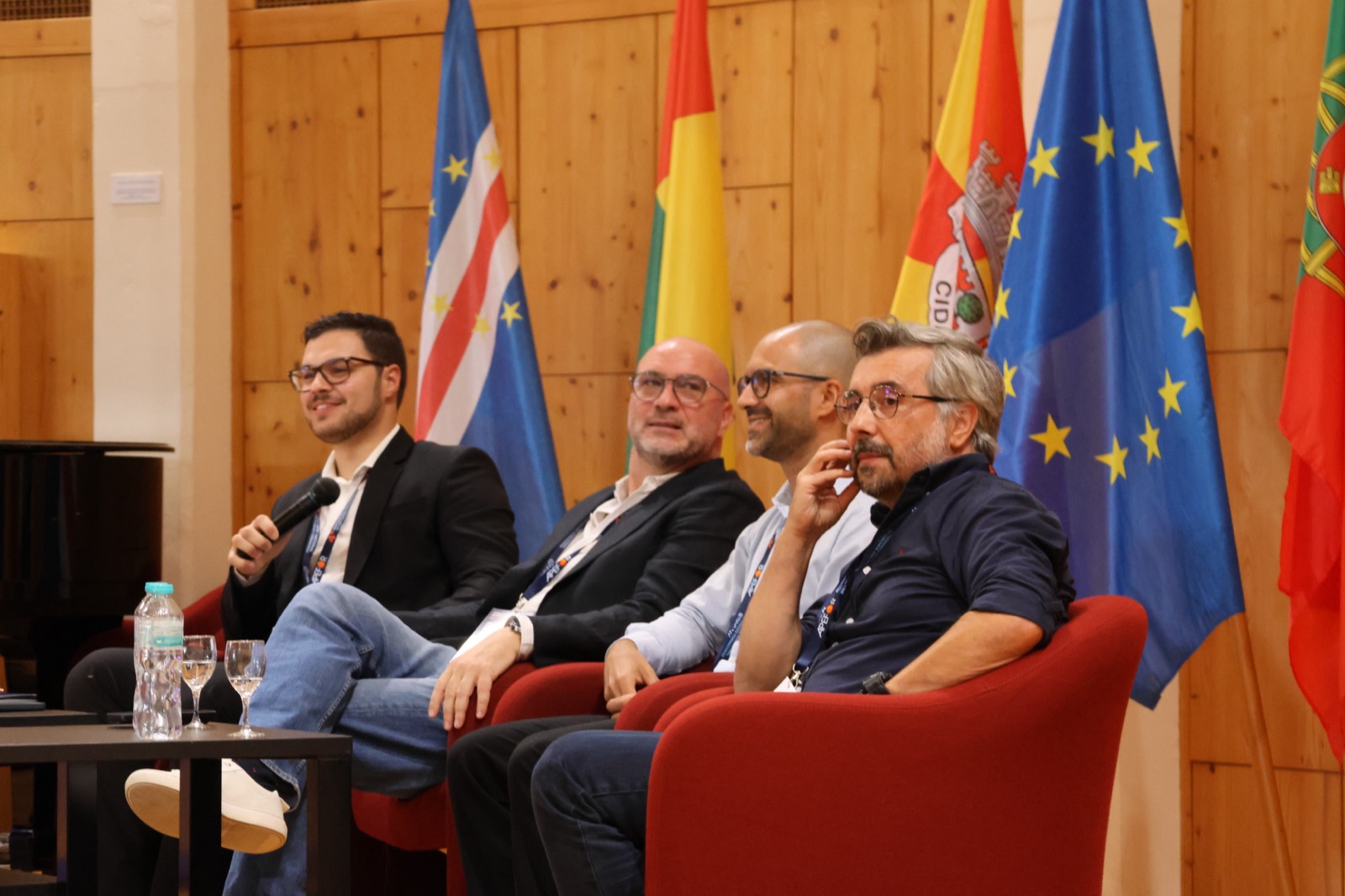
Prof. Celestino’s talk was a very practical guide. He proposed changing the question from “Does this work?” to “Who is accountable for this?”.
- “Delegate work, not judgement.” A matrix that separates what can be delegated (initial screening of enrolments, exercise variants), what is co-piloted with full verification (replies to complaints, rubrics and draft feedback) and what always stays with people (certification decisions, relationship and empathy with learners, fraud detection).
- What never goes into a prompt: health data and special educational needs data, individual assessments, learners’ names and identifiers. Pseudonymising beforehand solves most cases.
- A concrete example: 200 open-ended surveys, which used to take days of manual work, processed in 4 minutes with AI. And a system that accepts that 8% of answers are ambiguous, instead of forcing them into a category, is being useful.
- A roadmap for Monday: an inventory of what is already used, a one-page policy, AI use levels stated for each assignment, a literacy plan (Article 4), data rules on display, a verification protocol and control indicators.
His closing line sums up the panel well: “The choice of tool is reversible. The absence of governance is not.”
Cláudio Costa’s example
Cláudio Costa presented a program he developed himself with vibe coding to speed up the submission of payment claims, backed by the evidence required in the managing authority’s guidelines, and to systematise the cumulative physical execution. These are two operational problems that many training providers with funded projects know well.
Vibe coding means describing what you want in natural language and letting AI write the code. Someone who knows the process from the inside can now build the tool they need without waiting for a development team or a vendor. Cláudio’s example shows exactly that: the person who knows the problem best is now in a position to solve it.
What I said about building solutions in-house applies here too. A tool like this works with learners’ data and with documents that will be submitted to the managing authority, so it needs the same rules: knowing what data goes in, who has access and who checks the result before submission. (I wrote about the risks of fast AI prototypes.)
How to start tomorrow
- Choose 1 task that is repetitive, low-risk and easy to check.
- Run the agent in parallel with the current process for 2 weeks.
- Only then give it more access, and train whoever will supervise it.
The opportunity belongs to training providers
If 38.7% of people already use generative AI and only 11.5% of companies use AI, someone has to close that gap. Training providers are in the best position to do it: AI literacy for non-technical people, AI applied by sector and role, and supervising agents, which will be the new “managing people”.
My bet: a year from now we will be working very differently, each of us interacting every day with 1 or more assistants.
I’ll leave you with the question I closed my presentation with: what is the first task in your organisation that you would hand over to an agent, and who will supervise it?